301 Stainless Steel
Download Data Sheet PDF
Type 301 is an austenitic chromium-nickel stainless steel. This alloy is nonmagnetic in the annealed condition, but becomes magnetic when cold worked. 301 has a nominal composition of 17 percent chromium and 7 percent nickel. Type 301 is available annealed and in a variety of temper-rolled conditions.
High strength and excellent corrosion resistance make this versatile grade suitable for automobile trim, hose clamps, springs and similar applications.
Resistance to oxidation
Type 301 possesses good resistance to oxidation at temperatures up to 1550°F (840°C). At 1600°F (871°C), Type 301 exhibits an oxidation weight gain of 10mg/cm2 in 1,000 hours. Therefore, this stainless steel is not suggested for use at 1600°F.
Chemical composition
Represented by ASTM A240 and A666.
Hardness
Typical hardness values for annealed and cold-rolled Type 301 are given in the following table.
| Temper | Brinell Hardness | Rockwell Hardness |
|---|---|---|
| Annealed | 165 | B86 |
| 1/4 Hard | 255 | B25 |
| 1/2 Hard | 297 | B32 |
| 3/4 Hard | 342 | B37 |
| Full Hard | 383 | B41 |
Mechanical properties
| Condition | UTS ksi (MPa) min* | 0.2% YS ksi (MPa) min* | Elongation % in 2" (50.8 mm) |
|---|---|---|---|
| Annealed | 120 (827) | 45 (310) | 60 |
| 1/4 Hard | 125 (862) | 75 (517) | 25 |
| 1/2 Hard | 150 (1034) | 110 (758) | 18 |
| 3/4 Hard | 175 (1207) | 135 (931) | 12 |
| Full Hard | 185 (1276) | 140 (965) | 9 |
* Minimum - standard practice is to produce to either minimum tensile strength, minimum yield strength or minimum hardness, but not to combinations of these properties.
Heat treatment
Type 301 is non-hardenable by heat treatment. Annealing: Heat to 1900 - 2050°F (1038 - 1121°C), then water quench. Stress Relief Annealing: Heat to 500 - 900°F (260 - 482°C), then air cool.
Facility information
- 50 000 square foot operating facility
- 18 feet under the crane rail
- Main coil bay 280 feet in length
- Crane capacity 15 Ton
Delivery format
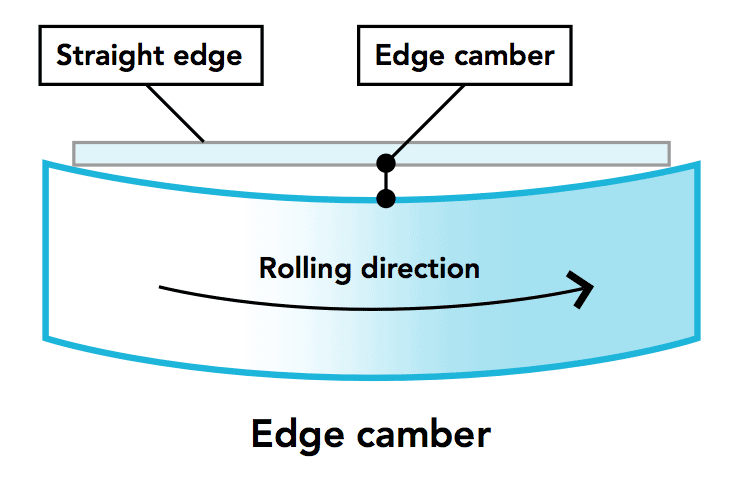
* Edge camber = the greatest deviation of a side edge from a straight line, the measurement being taken on the concave side with a straight edge.